
What Skipping This Costs You
Put off garage door maintenance one more season and the bill usually shows up at the worst possible time — a snapped spring on a sub-zero morning, a frozen panel that won't budge when you're already late, or an opener motor straining itself out because the door is heavier and stiffer than it should be. A repair that costs little in October can turn into a weekend emergency call in January once ice, road salt, and hard freezes get involved. The good news is that most of what causes those breakdowns is preventable with an hour of attention now, before the first real cold snap hits Madison County.
Why Winter Is Hard on a Garage Door Here
This part of Illinois doesn't do mild winters. Temperatures swing from unseasonably warm afternoons to hard overnight freezes, sometimes within the same week. That constant expansion and contraction stresses metal springs, tightens up lubricant, and shrinks rubber seals just enough to let cold air and moisture in. Add road salt tracked in on tires and boots, plus slush that refreezes overnight, and you've got a setup that accelerates rust on tracks, hinges, and hardware faster than most homeowners expect.
1. Inspect and Replace Weatherstripping
The rubber seal along the bottom of the door and the strips along the sides are your first defense against cold air, snow melt, and drafts. Over a humid summer and into fall, that rubber can crack, flatten, or pull away from the frame. Run your hand along the bottom seal — if it's brittle, torn, or no longer sitting flush against the floor, replace it now. A new seal is inexpensive (typically in the $20–$50 range for materials) and makes a noticeable difference in how much cold air gets into an attached garage.
2. Check the Springs Before They Check You
Garage door springs do most of the heavy lifting, and cold steel is less forgiving than warm steel. A spring that's been fraying or showing rust all summer is far more likely to snap once temperatures drop and the metal contracts. Signs of a spring on its way out include a door that feels heavier when lifted manually, visible gaps in the coil, or a loud bang from the garage (that's often a spring letting go). Springs are under extreme tension and are not a DIY repair — this is one job where calling for spring replacement before winter is genuinely worth it, rather than waiting for a failure on an icy morning.
3. Lubricate Rollers, Hinges, and Tracks
Summer humidity followed by fall dryness takes a toll on lubrication. Use a silicone-based or garage-door-specific lubricant (avoid WD-40 as a long-term fix — it's a solvent, not a lubricant) on the rollers, hinges, and track. This keeps movement smooth even as temperatures drop and reduces the strain on the opener motor. While you're at it, wipe down the tracks to clear out any dirt or salt residue that's built up — it mixes with moisture and speeds up corrosion.
4. Test the Auto-Reverse and Sensors
Cold weather can affect how sensors read, especially if they've drifted out of alignment or picked up grime. Test the auto-reverse function by placing a piece of wood on the ground where the door closes — it should reverse on contact. Also wipe down the photo-eye sensors near the bottom of the tracks; a thin film of dust or moisture can cause the door to behave erratically or refuse to close, which is a common cold-weather service call.
5. Look at Insulation, Especially for Attached Garages
If your garage shares a wall with living space, an uninsulated door lets a surprising amount of cold through. Insulated garage doors or retrofit insulation kits help stabilize the garage temperature, which matters for anything stored there — pipes, a water heater, a freezer — and for the comfort of any adjacent rooms. This isn't a mid-winter project; it's easier to tackle while temperatures are still workable.
6. Check Balance and Hardware Before Storm Season Memory Fades
After a summer of storms and before winter settles in is a good time to check overall balance. Disconnect the opener and lift the door manually halfway — it should stay in place. If it drifts up or falls, the door isn't balanced, which puts extra strain on the opener and springs alike. Tighten any loose bolts or brackets while you're in there; vibration from regular use loosens hardware over time, and a loose bracket in winter is more likely to bind or jam.
When to Call Edwardsville Garage Door
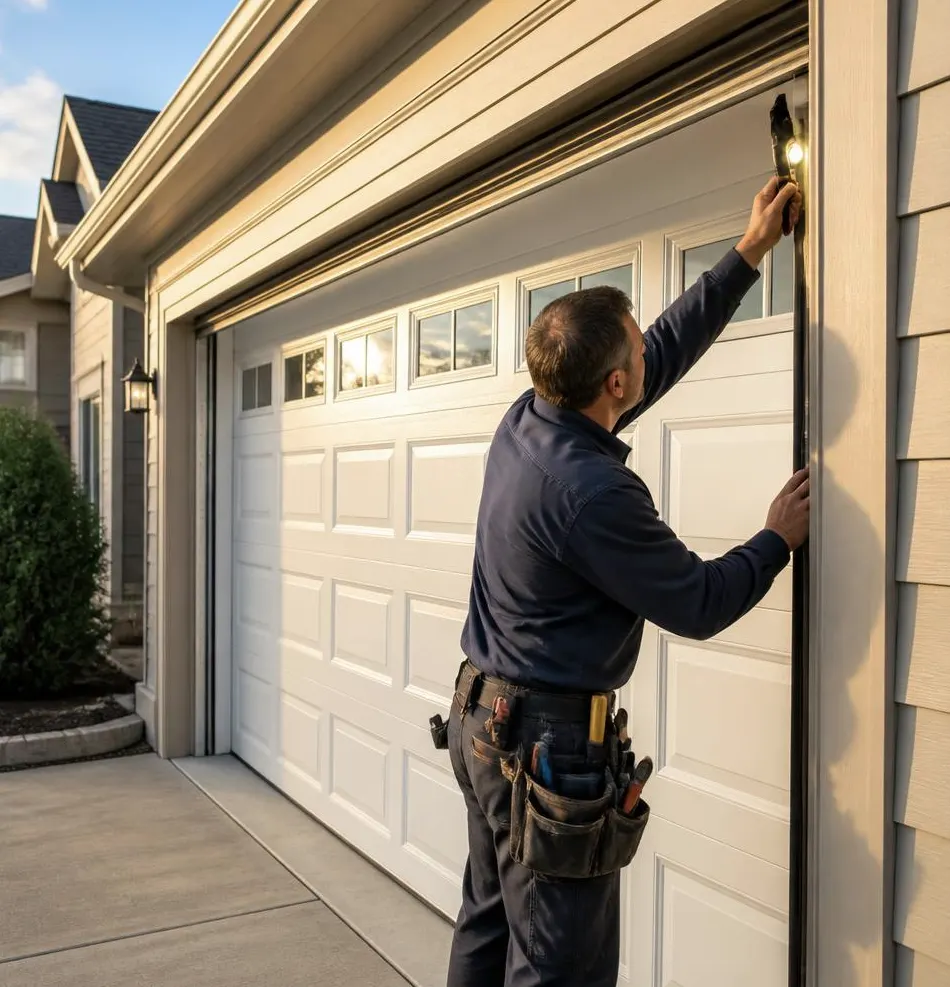
If your door is sticking, sagging on one side, making grinding or popping noises, or if you've spotted a stretched or rusted spring, don't wait for a deep freeze to force the issue. Edwardsville Garage Door handles spring replacement with the right tools and tensioning equipment for the job, and our garage door maintenance service covers the inspection, lubrication, and hardware checks homeowners often skip or don't have the equipment to do safely. We also handle garage door opener repair if your sensors or auto-reverse aren't behaving as the weather turns.
Whether you're in Edwardsville, Glen Carbon, Maryville, Collinsville, Troy, Granite City, Highland, or Bethalto, getting ahead of winter now means one less thing to worry about once the ice shows up. Call Edwardsville Garage Door today to schedule a pre-winter inspection and keep your door working the way it should all season long.